
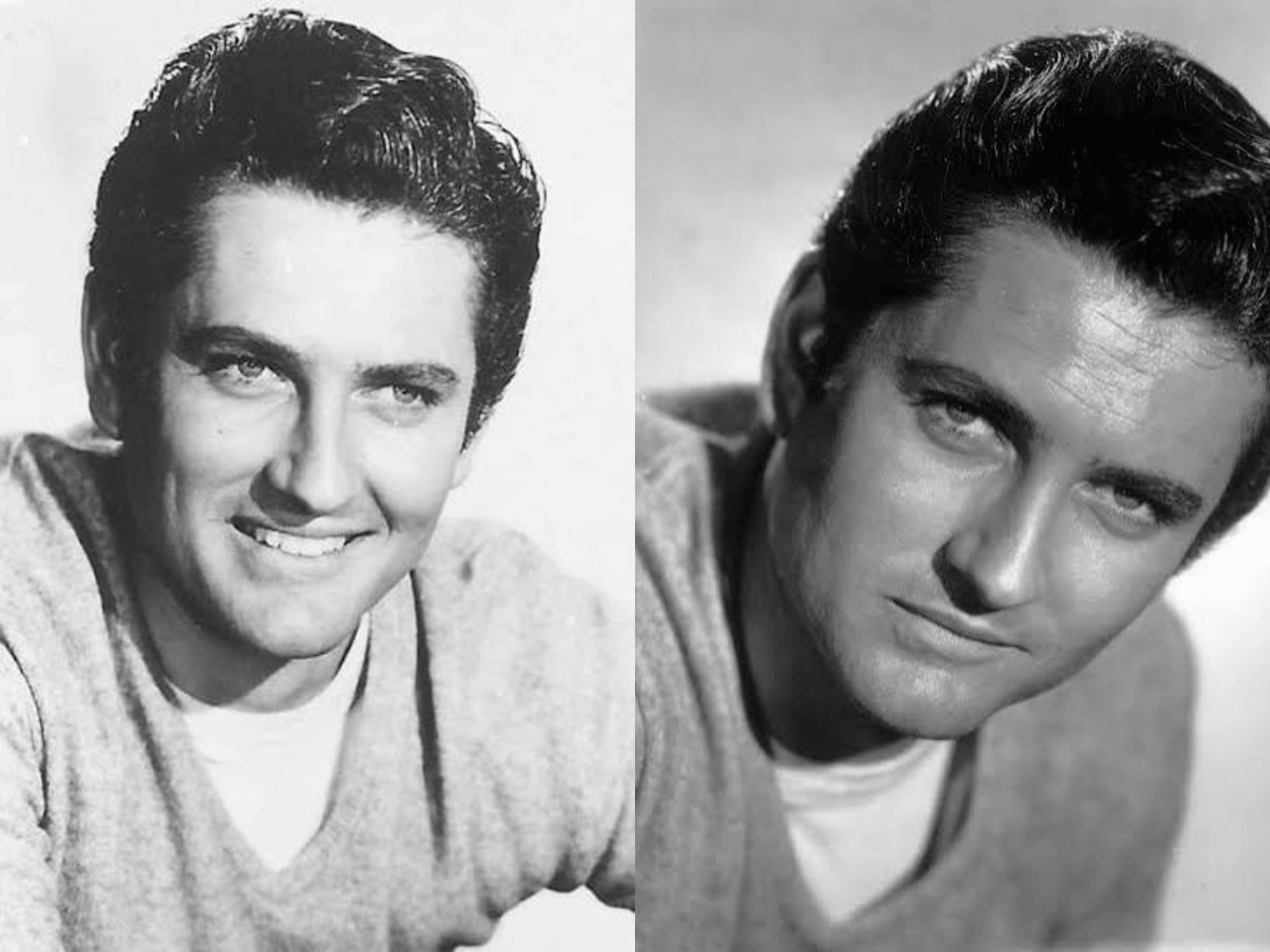
John Drew Barrymore was the son of legendary actor John Barrymore and the father of Drew Barrymore, yet his own acting career never matched the family name. Born into Hollywood’s most celebrated acting dynasty, he spent his life struggling with addiction, legal troubles, and professional setbacks that left him a forgotten figure in the family tree. This is the story of a man who carried the Barrymore legacy but could never escape its weight.
The Barrymore Dynasty
The Barrymore family represented the closest thing American entertainment had to royalty. John Drew Barrymore entered this world on June 4, 1932, in Los Angeles, California, as John Blyth Barrymore Jr. . His father was the legendary stage and screen actor John Barrymore, known for his groundbreaking Shakespearean performances and classic films like Grand Hotel and Dinner at Eight. His mother was Dolores Costello, a prominent actress in her own right. His father’s siblings, Lionel and Ethel Barrymore, were also major stars, making the Barrymores the dominant acting family of their era.
His parents divorced when he was around three years old, and he claimed to have met his famous father only once . This early absence of his father would shape much of his troubled life. Despite this separation, he carried the Barrymore name and all the expectations that came with it.
Early Life and Military Service
Young John grew up in the shadow of his family’s achievements. During World War II, he and his cousin Dirk Drew Davenport enlisted in the United States Navy while both were underage . Because they were tall for their age, the military did not discover their true ages until several weeks later. The boys were discharged once the truth came to light. This early act of rebellion foreshadowed the pattern of impulsive behavior that would define much of his life.
Acting Career in the 1950s
At seventeen, Barrymore ran away from home and signed a film contract . He made his film debut and quickly rose to leading man status. His second movie, the Western High Lonesome (1950), written and directed by Alan Le May, placed him in a starring role . He followed this with The Big Night (1951), directed by Joseph Losey, and Thunderbirds (1952) with John Derek at Republic Pictures .
His film career did not achieve significant success, so he transitioned to television. He guest-starred on numerous shows, including Schlitz Playhouse, The 20th Century-Fox Hour, and multiple episodes of Matinee Theatre . In 1957, he even directed an episode of Matinee Theatre titled “One for All.” He noted at the time that television provided opportunities that movies had not .
In 1958, he changed his middle name to Drew, becoming John Drew Barrymore . He appeared in supporting roles in films like High School Confidential! (1958) at MGM and the interracial drama Night of the Quarter Moon (1959) with Julie London . In 1960, he received a star on the Hollywood Walk of Fame at 7004 Hollywood Boulevard for his contributions to television . The family’s dominance on the Walk of Fame continued decades later when his daughter Drew received her own star in 2004, making the Barrymores one of the most honored families on the boulevard .
European Years
Seeking new opportunities, Barrymore traveled to Italy and starred in The Cossacks (1960) with Edmund Purdom . He remained in Europe for several years, taking lead roles in films including The Night They Killed Rasputin (1960), where he played Felix Yusupov, and The Pharaohs’ Woman (1961). He portrayed Ulysses in The Trojan Horse (1961) and played both Judas and Jesus in Pontius Pilate (1961) . He also appeared in Invasion 1700 (1962), Rome Against Rome (1964), and the UK film The Christine Keeler Story (1963).
He made over a dozen films abroad during this period. By his own admission, none of them were good . He acknowledged the poor quality of his European work, which did little to advance his career.
The Star Trek Incident
In 1966, Barrymore was cast in a major guest role as Lazarus in the Star Trek episode “The Alternative Factor” . This represented a significant opportunity to revive his career. However, he failed to show up for filming . Director Gerd Oswald shot scenes that did not involve Barrymore on the first day while hoping he would appear. By the second day, producers faced a choice: shut down production and scrap the episode or find a replacement .
Actor Robert Brown was brought in as an emergency replacement . The episode went two days over schedule because of the disruption . Producers filed a grievance with the Screen Actors Guild, which suspended Barrymore’s membership for six months . The Star Trek incident became a notorious example of his unreliability and severely damaged his career prospects.
Legal Troubles and Substance Abuse
Throughout the 1960s, Barrymore faced frequent legal problems. He was arrested for public drunkenness, spousal abuse, and drug possession . In December 1958, he was sentenced to three weekends in prison after a drunken public fight with his wife in a car park . In January 1959, his ex-wife sued for nonpayment of alimony . In March 1959, he was arrested for suspected hit-and-run drunk driving . In 1964, he went to prison for marijuana possession . In 1967, a San Bernardino County jury convicted him of possession of drug paraphernalia, and he was placed on probation .
These incidents made it increasingly difficult for him to find work in Hollywood. He sporadically appeared on television series, including Gunsmoke, Rawhide, and Run for Your Life, but his reputation preceded him .
Marriages and Children
Barrymore married four times, and all four marriages ended in divorce. His first marriage was to actress Cara Williams in 1952. They had one child, John Blyth Barrymore III, born in 1954, before divorcing in 1959 . His second marriage was to Gabriella Palazzoli in 1960. They had a daughter, Blyth Dolores Barrymore, born that same year, and divorced in 1970 . His third marriage was to Ildiko Jaid Mako in 1971. Their daughter, Drew Barrymore, was born on February 22, 1975. They divorced in 1984 . His fourth marriage was to Nina Wayne in 1985, and they divorced in 1994 . He also had a fourth child, Brahma Jessica Blyth Barrymore, born in 1966 .
Estrangement from Family
Barrymore’s behavior led to estrangement from his children, particularly his daughter Drew. In her memoir Little Girl Lost, written as a teenage star battling alcoholism herself, Drew described her father as menacing . She wrote that he showed up only to abuse her and her mother and to ask for money .
Despite this difficult history, Drew Barrymore demonstrated remarkable compassion in her father’s final years. In 2003, she moved him near her home and paid his medical bills, even though they had been estranged . She later acknowledged the complexity of their relationship.
Final Years and Death
John Drew Barrymore died on November 29, 2004, in Los Angeles at the age of seventy-two . The cause of death was cancer. His daughter released a statement saying, “He was a cool cat. Please smile when you think of him” . His ashes were scattered at Joshua Tree National Park, his favorite place .
He left behind four children, none of whom maintained close relationships with him during most of his life. His daughter Drew went on to become one of the most successful actresses of her generation, carrying the Barrymore name into a new century. His son John Blyth Barrymore III also survived him .
Legacy
John Drew Barrymore remains a tragic figure in Hollywood history. He inherited enormous talent and opportunity but could never fulfill his potential. His struggles mirrored those of his famous father, who also battled alcoholism and died relatively young. The Barrymore dynasty continued through his daughter Drew, who overcame her own early struggles with addiction to build a successful career in film and television. Today, Drew Barrymore represents the family’s enduring legacy, while her father serves as a cautionary tale about the weight of fame and the consequences of personal demons left unchecked.How did John Drew Barrymore die?
John Drew Barrymore died of cancer on November 29, 2004, in Los Angeles, California, at the age of 72 .
What happened with his Star Trek episode?
He was originally cast as Lazarus in the 1966 Star Trek episode “The Alternative Factor” but failed to show up for filming . He was replaced at the last minute by actor Robert Brown, causing production to go two days over schedule . The Screen Actors Guild suspended his membership for six months as a result .
Was he estranged from Drew Barrymore?
Yes, he was estranged from his children, including Drew, for much of his life . However, in 2003, Drew moved him near her home and paid his medical bills until his death the following year . After his death, she released a statement saying, “He was a cool cat. Please smile when you think of him” . His ashes were scattered at Joshua Tree National Park, his favorite place .
How many times was John Drew Barrymore married and how many children did he have?
He was married four times, and all four marriages ended in divorce . He had four children, one from each marriage: John Blyth Barrymore III (with Cara Williams), Blyth Dolores Barrymore (with Gabriella Palazzoli), Drew Barrymore (with Ildiko Jaid Mako), and Brahma Jessica Blyth Barrymore (with Nina Wayne) .
