
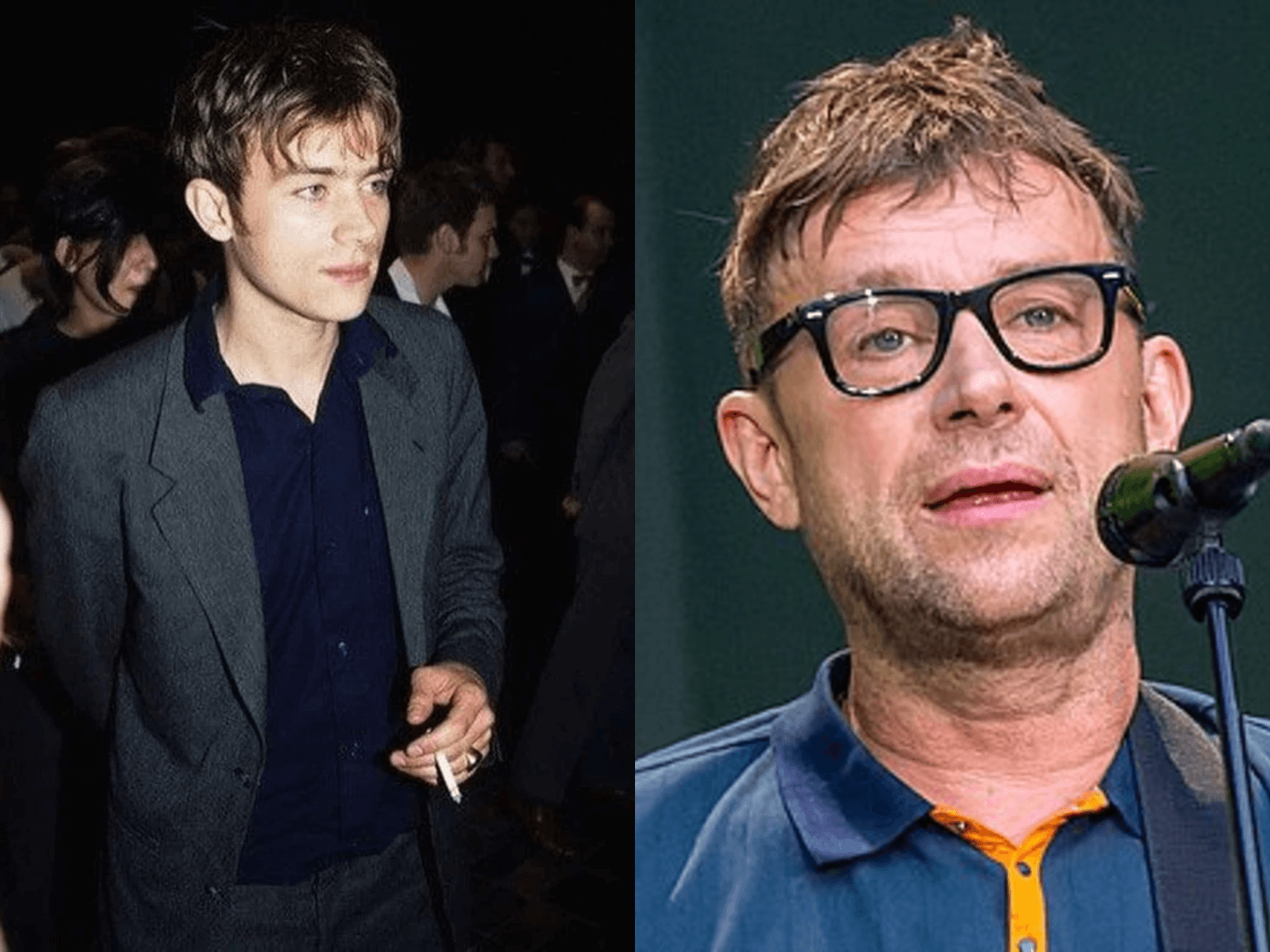
The phrase “Damon Albarn young” refers to the British musician during his youth, specifically his formative years and his rise to fame as the frontman of Blur in the 1990s. Damon Albarn was born on March 23, 1968, in Whitechapel, London, and grew up in a creative household that shaped his future career
Early Life and Background
Damon Albarn was born to Keith Albarn, a former figure in England’s late-1960s psychedelic rock scene who managed Soft Machine, and Hazel Albarn, a theatrical set designer . The family lived in Leytonstone, East London, before moving to Colchester, Essex in the late 1970s . This bohemian, middle-class upbringing exposed Albarn to music and performance from an early age.
Albarn attended George Tomlinson Primary School, where he developed an interest in music, learning guitar, piano, and violin . At Stanway Comprehensive School around age 12, he met guitarist Graham Coxon, marking the beginning of a lifelong creative partnership . Albarn briefly attended East 15 Acting School but dropped out after a year .
Forming Blur
Blur was formed in London in 1988, consisting of Albarn on vocals and keyboards, Graham Coxon on guitar, Alex James on bass, and Dave Rowntree on drums . The band initially performed under the name Seymour before changing it to Blur . Their debut album Leisure was released in August 1991, incorporating sounds of Madchester and shoegaze .
Although Leisure brought critical acclaim and built a solid fanbase through Albarn’s onstage charisma, the album was considered musically repetitive . The band soon faced pressure to evolve as American grunge dominated the rock landscape .
The Britpop Years
Blur’s second album Modern Life Is Rubbish arrived in May 1993, marking an ideological and image shift toward celebrating British heritage . This album, along with Parklife (1994) and The Great Escape (1995), represented the sound of Young Britain with jaunty guitars and post-rave beats . Parklife became their breakthrough, driven by infectious singles like “Girls & Boys” .
The band swept the 1995 Brit Awards, winning four trophies including British Album of the Year for Parklife . This success positioned Blur at the vanguard of Britpop, a movement that celebrated British cultural identity in contrast to American grunge .Quick Bio: Damon Albarn
Notes on verification: Net worth figures are estimates from third-party sources and not officially confirmed by Albarn. Current relationship details are based on media reports citing unnamed sources.
The Blur vs. Oasis Feud
The rivalry between Blur and Oasis defined the Britpop era. Tensions escalated after Oasis scored their first Number 1 with “Some Might Say” in April 1995, when Liam Gallagher reportedly confronted Albarn at a celebration party . Albarn later admitted in the documentary No Distance Left To Run that “Noel Gallagher used to take the piss out of me constantly and it really, really hurt at the time” .
On August 14, 1995, Blur released “Country House” on the same day as Oasis’s “Roll With It” . The chart battle made national news. Blur’s “Country House” won the battle, selling 274,000 copies to “Roll With It”‘s 216,000 . As Alex James later observed, “Blur won the battle, Oasis won the war, then Blur went on to win the whole campaign” .
Young Damon Albarn’s Image and Style
During his Britpop heyday, Albarn was regarded as a fashion icon and appeared on approximately fifty magazine covers from 1995 to 1996, including the legendary style bible The Face . His youthful image featured floppy hair and mod-inspired clothing, with one BBC profile describing him as the “epitome of Brit-pop” who would “dress up in deerstalker and plus-fours” for performances .
The BBC noted that Blur’s music drew inspiration from The Kinks and Small Faces, with the band positioned as middle-class in contrast to Oasis’s northern working-class identity . This contrast fueled media narratives that shaped how young Albarn was perceived by the public.
Personal Life During the Britpop Era
Albarn had a highly public relationship with Justine Frischmann, frontwoman of the band Elastica, lasting seven years from 1991 to 1998 . Frischmann later told The Times that “pressure, alcohol and youth” contributed to their split, explaining that “we were just kids and we didn’t know what we were doing” .
The breakup inspired Blur’s 1999 album 13, a darker, more introspective work . Frischmann also revealed that “it was hard for Damon when Elastica started getting some success in America,” suggesting competitive tensions existed between them .
Beyond Blur: Gorillaz and Later Work
Even during Blur’s peak, Albarn sought creative outlets beyond the band. He created Gorillaz with cartoonist Jamie Hewlett in 1998, launching the virtual band as a way to escape the spotlight that had followed him throughout the Britpop years . The project’s self-titled debut album was released in 2001, reaching number three on the UK albums chart and achieving success in the United States, where it became the sixth-biggest selling album by a UK act that year .
Albarn’s subsequent projects demonstrated his restless creativity. He recorded Mali Music (2002) following an Oxfam-sponsored trip to Mali, founded Africa Express in 2006 to foster cross-cultural musical collaboration, and composed the music for Monkey: Journey to the West (2007), a Mandarin-language opera that premiered at the Manchester International Festival . He was made an Officer of the Order of the British Empire (OBE) in 2016 .
The “Damon Albarn young” era represents a specific cultural moment when a middle-class art school student from Essex became the face of a British musical movement. His trajectory from Stanway Comprehensive School to the Britpop battlefield and eventually to global creative ventures demonstrates how that youthful period shaped everything that followed.Frequently Asked Questions
What was Damon Albarn like when he was young?
Damon Albarn was born on March 23, 1968, and grew up in a bohemian, middle-class household in East London and later Colchester. He met guitarist Graham Coxon at Stanway Comprehensive School around age 12, and they formed the band that became Blur in 1988. During his Britpop heyday in the mid-1990s, Albarn was a fashionable frontman known for his floppy hair and mod-inspired style.
Did Blur really beat Oasis in the Battle of Britpop?
Yes, Blur won the chart battle on August 14, 1995. Their single “Country House” sold 274,000 copies compared to Oasis’s “Roll With It” at 216,000, giving Blur the number one spot. However, Oasis ultimately achieved greater long-term commercial success, particularly in the United States.
What did Damon Albarn do after Blur’s Britpop era?
Albarn founded Gorillaz with artist Jamie Hewlett in the late 1990s, creating a virtual band fronted by animated characters. The project’s self-titled debut album was released in 2001 and became an international success, with Gorillaz later recognized as the “Most Successful Virtual Band” by Guinness. He also pursued projects like Mali Music (2002) and the opera Monkey: Journey to the West (2007).
Who was Damon Albarn’s most famous relationship during his youth?
Albarn had a highly public seven-year relationship with Justine Frischmann, frontwoman of the band Elastica, from 1991 to 1998. Their breakup inspired Blur’s darker, more introspective 1999 album 13. Frischmann later told The Times that “pressure, alcohol and youth” contributed to their split.
