
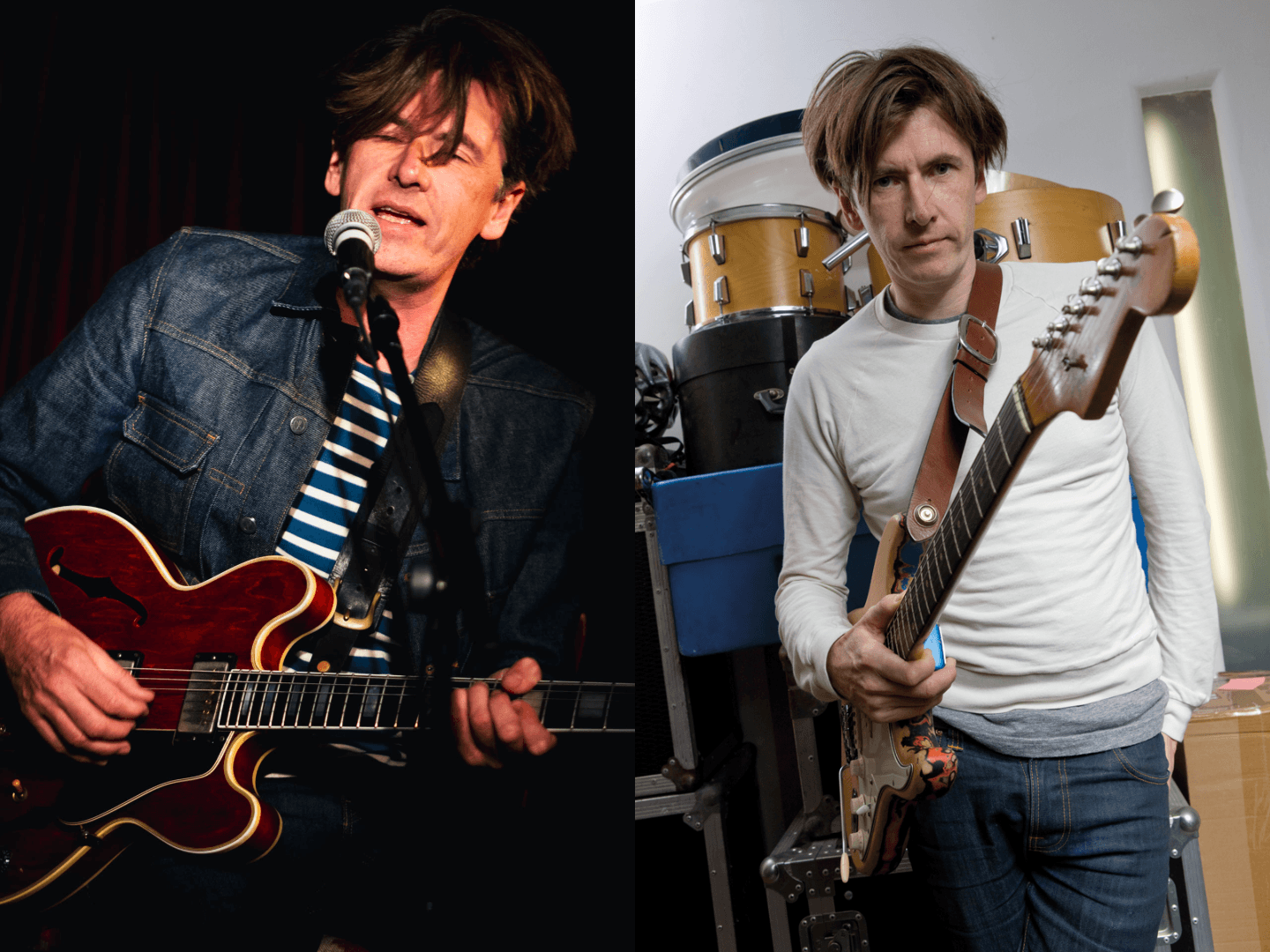
Bernard Butler was Suede’s original guitarist and co-writer, the creative force behind their Mercury Prize-winning debut, who left the band in 1994 and later reconciled with Brett Anderson to form The Tears. Their story spans a brilliant debut, an acrimonious split, a surprising reunion, and a lasting musical legacy.
The Early Suede Era and Butler’s Role
Bernard Butler joined Suede in 1992 and quickly became central to the band’s identity. As lead guitarist, he co-wrote every track on their self-titled debut album, released in 1993. That record won the Mercury Prize, a fact confirmed by the BBC, which described Butler as a “guitar hero who helped write some of the biggest indie anthems of the 1990s” .
Butler’s partnership with lead singer Brett Anderson proved immediately potent. The album’s singles, including “The Drowners” and “Animal Nitrate,” established Suede as a defining force in British guitar music. Butler’s intricate, layered guitar work contrasted sharply with the raw immediacy of many contemporaries, giving the band a distinctive, theatrical edge.
The Departure During Dog Man Star
The creative relationship deteriorated during sessions for the second album, Dog Man Star. Butler clashed repeatedly with producer Ed Buller, whom he later criticized for doing a “terrible shoddy job” . He issued an ultimatum demanding Buller’s dismissal, but the rest of the band refused.
Butler left the sessions on 8 July 1994, before the album was complete . He was replaced by Richard Oakes, who was seventeen at the time. The circumstances were bitter. According to later accounts, Butler turned up at the studio to find he was barred from entry, and his guitars were left for collection . Anderson subsequently offered to play acoustic guitar to fill gaps left by Butler’s departure .
Solo Work and Production Career
After Suede, Butler built a substantial second career. He released two solo albums, People Move On (1998) and Friends and Lovers (1999), before shifting his focus increasingly toward production .
His production work on Duffy’s debut album Rockferry proved transformative. The record became the UK’s biggest-selling album of 2008, and Butler won the Brit Award for Best Producer at the 2009 ceremony, an honor tied to the Music Producers Guild Award . He also worked with The Libertines, Tricky, and Sharleen Spiteri, among others .
Reconciliation and The Tears
In 2004, Anderson and Butler reconciled and formed a new band, The Tears. According to Billboard, the name came from a line in a Philip Larkin poem . Anderson told Hotpress that he initiated the reunion because he wanted to write with Butler again: “As soon as Suede finished I knew I wanted to write with Butler again. He felt the same” .
Their debut album, Here Come the Tears, arrived in 2005. The lead single “Refugees” reached number 9 on the UK charts . Anderson was careful to characterize the partnership honestly, telling Hotpress: “I’m not saying we’re inseparable. My favourite Suede album, Coming Up, was written without him. That said we do have a way of working together which I think is very special” . The project released only one album.
The 2010 Reunion and Butler’s Absence
When Suede announced a reunion for a Teenage Cancer Trust concert at the Royal Albert Hall in 2010, Butler was not included. He told BBC 6 Music that he had not been invited: “The honest answer is that I haven’t been asked to do it” .
Butler downplayed his absence with characteristic self-deprecation. “They were a really successful band and I was with them for 5 minutes, relatively, to the history of the band,” he said, adding that he would attend the show and be “in the front row chucking peanuts at them” . He also reiterated his long-standing opposition to nostalgia reunions, telling the BBC in 2009: “I’m obsessively opposed to nostalgia. I hate the idea of it” .
Legacy and Recent Work
Butler’s influence on Suede’s early sound remains his most celebrated contribution. His guitar work and songwriting on the debut album and his partial contributions to Dog Man Star shaped the band’s artistic reputation, even as his departure defined their subsequent trajectory.
He has continued to work prolifically. In 2022, he collaborated with Irish actor and singer Jessie Buckley on the Mercury Prize-nominated album For All Our Days That Tear the Heart . In 2024, he released Good Grief, his first solo album in twenty-five years, which the Irish Times described as carrying “a hefty confessional tone” rooted in personal loss dating back to 1993 . The album confirmed that Butler’s creative restlessness, the same quality that once made him difficult to contain within Suede, remains intact.
FAQs About Bernard Butler and Suede
Why did Bernard Butler leave Suede in 1994?
Butler departed during the recording of Suede’s second album, Dog Man Star, amid escalating tensions with frontman Brett Anderson and disagreements over producer Ed Buller. He walked out before the album was finished and was replaced by the then-17-year-old Richard Oakes. Butler later admitted that leaving was a “stupid mistake,” explaining that he had issued an ultimatum over the producer that backfired.
Did Bernard Butler ever reunite with Brett Anderson after Suede?
Yes, the pair reconciled in 2004 and formed a new band called The Tears. Anderson initiated contact after Suede disbanded, telling NME that he felt he had “written my best songs with Bernard”. They released one album, Here Come the Tears, in 2005, and the lead single “Refugees” reached number 9 on the UK charts. The project was short-lived, effectively ending by 2006.
Why wasn’t Bernard Butler part of Suede’s 2010 reunion?
Butler was not invited to join the reunion for the Teenage Cancer Trust concert at the Royal Albert Hall. He told BBC 6 Music: “The honest answer is that I haven’t been asked to do it”. He also downplayed his absence, noting that he was with the band for “five minutes, relatively, to the history of the band,” and joked that he would be in the front row “chucking peanuts at them”.
What has Bernard Butler done since leaving Suede?
Butler built a significant career as a producer and solo artist. He won the Brit Award for Best Producer in 2009 for his work on Duffy’s multi-million-selling album Rockferry. He has also collaborated with The Libertines, Tricky, and Sam Lee, among others. In 2024, he released Good Grief, his first solo album in 25 years.
